Platform for Research

In addition to research initiatives led by the Temple Ambler Field Station, the Field Station serves as a platform for research by hosting and facilitating Temple and external researchers and students who undertake field studies under their own leadership.  Researchers take advantage of the Field Station’s natural areas and research facilities, and build on its diverse data streams to conduct cutting-edge research across disciplines.  Please fill out the User Request Form if you are interested in conducting research at the Field Station or would benefit from the support of the Field Station.


Some examples of current research projects hosted at the Field Station include:
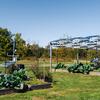
A view of a garden featuring multiple wooden raised beds filled with mature leafy green vegetables. Above one of the beds stands a silver-metal pergola-style frame supporting several angled solar panels overhead, casting some shade onto the plants below. Additional garden equipment and weather stations sit next to the beds. The garden sits in a grassy field bordered by trees with green-brown foliage, under a bright, cloudless blue sky.

Agrivoltaics:  the co-location of solar energy and agriculture

This research, led by Dr. Sujith Ravi, Associate Professor of Earth and Environmental Science at Temple University, and funded by the National Science Foundation and the United States Department of Agriculture, investigates the co-location of solar photovoltaic panels with agriculture. Field research at the Temple Ambler Field Station and at sites across the world is demonstrating how such co-location can provide important social, economic and environmental co-benefits and is helping to facilitate rapid deployment.

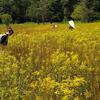
Five scientists carrying large bug-catching nets are scattered throughout a field of tall shrubbery and yellow flowers. A lush green forest borders the edge of the field. It is a warm day, with the sun shining overhead.

Prairie restoration and the conservation of rare butterflies

This research, led by Dr. Brent Sewall, Associate Professor of Biology at Temple University, and funded by the United States Fish and Wildlife Service, investigates the rare Eastern Regal Fritillary butterfly and other prairie-dependent species. The research explores opportunities for conservation through habitat restoration and reintroduction within historical habitat. Field research across Pennsylvania and in neighboring states is paired with experimentation and laboratory research at the Temple Ambler Field Station to improve restoration practices in degraded grasslands and increase the success of captive rearing programs.  

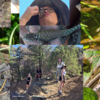
A collage of outdoor wildlife fieldwork and animal encounters. In the upper left, a person wearing a backpack carefully climbs a rocky, shrub-covered hillside. At the top center, a person in a wide-brimmed hat and glasses holds a small reptile close to their face. On the right, a green frog sits partially submerged in shallow water among some green plants. On the left center, a turtle rests on a log surrounded by green vegetation. In the middle, a small, dark, spotted lizard is held in someone’s open hand.

Response of reptiles and amphibians to disturbance, climate change and development

This research, led by Dr. Christopher Agard, Assistant Professor of Biology at Temple University, is monitoring herptiles (reptiles and amphibians) at the Temple Ambler Field Station to track population changes over time and to assess community responses to disturbance. This research will also document herptiles of southeastern Pennsylvania as part of the Pennsylvania Amphibian and Reptile Survey and assess changes in herptile abundance, community composition and population demographics from the effects of climate change and development. 

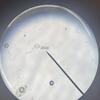
A microscopic view showing black and gray specks on a white background, representing biogenic silica structures found in soils.

Use of archaeobotanical remains to understand agricultural history

This research, led by Brian Carroll, a doctoral student in the Department of Anthropology at Temple University, is designed to refine methods for the extraction of phytoliths, biogenic silica structures that persist in soils even as other botanical remains degrade rapidly.  Research undertaken in both the field and laboratory at the Temple Ambler Field Station is laying the groundwork for archeological studies to investigate island colonization and reconstruct paleoenvironments at other sites.

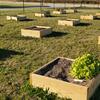
Seventeen square garden beds are arranged in rows across a mowed grassy field. Some beds contain lush, bright green leafy crops, while others are filled with brown, unplanted soil.

PFAS contamination and uptake by edible crops in urban gardens

This research, led by Dr. Bojeong Kim, Associate Professor of Earth and Environmental Science at Temple University, and funded by the Environmental Protection Agency, assesses the uptake and bioaccumulation of per- and polyfluoroalkyl substances (PFAS), which are harmful to human health and long lasting in the environment. Field research at the Temple Ambler Field Station is paired with laboratory studies to quantify PFAS contamination of crops as a result of soil amendments, irrigation water and nutrient amendments under conditions commonly experienced in urban gardens.

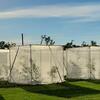
A long row of tall, cube-shaped white mesh enclosures are spaced out across a neatly mowed green field beneath a bright blue sky with wispy clouds. Each enclosure is supported by a dark metal frame and contains leafy plants or small trees visible through the translucent mesh walls. Sunlight illuminates the structures, casting soft shadows on the grass. A line of mature trees borders the field in the background.

The effects of the spotted lanternfly on native species in forest ecosystems

This research, led by Dr. Brent Sewall, Associate Professor of Biology at Temple University and Dr. Amy Freestone, Senior Scientist at the Smithsonian Environmental Research Center, and funded by the Pennsylvania Department of Military and Veterans Affairs, assesses risks posed by a newly invasive insect pest, the spotted lanternfly (Lycorma delicatula), to forest ecosystems. Field observation in central Pennsylvania is paired with experimental studies at the Temple Ambler Field Station to understand the spotted lanternfly’s selection of and impacts on plant host species.