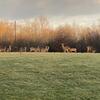
Deer eating on campus

Temple Ambler Deer Management Program

Temple University Ambler is experiencing a significant overabundance of deer on campus. Large populations of deer can cause significant challenges, including vehicle collisions, damage to crops and landscaping and an increase in ticks that could carry Lyme Disease. Well-designed deer management programs with established safety protocols can help reduce these conflicts and maintain healthier, more sustainable deer populations.

Beginning Saturday, November 21, 2026, Temple University Ambler, located in Upper Dublin Township, will join the township’s established Deer Management Program. The program, overseen by the Upper Dublin Police Department, operates in accordance with Pennsylvania Game Commission regulations and has maintained a perfect safety record since it began in 2009.

About the Program

The Deer Management Program will be active during university breaks and holidays, when fewer students are on campus.

Learn more about the program.

deer laying under a tree

Why Opt In to the Upper Dublin Program?

This program has proven successful and safe throughout its 16-year history. Currently the township manages deer in 12 township parks and open spaces totaling about 250 acres of property, including properties near the Ambler Campus. 

Learn more about why we opted in. 

How Will This Benefit Temple Ambler?

Over the years, the overpopulation of deer has significantly affected the field work and learning experiences of our horticulture students. There have been many instances in which deer have disfigured or completely destroyed plant samples that students rely on for hands-on study, while the high deer population and potential exposure to ticks have caused some students to feel hesitant or unsafe accessing certain areas of campus. 

Learn more about how this will benefit the campus.

deer eating plants on campus

Why is There a Need to Cull the Deer Population?

Deer management is not only a matter of public safety — reducing vehicle collisions, property damage, and disease risk — but also an essential component to maintain a healthy, balanced deer population. 

Learn more about why we are participating in the program. 

When Are the Select Hunters Allowed to Hunt?

Temple has selected to opt into this program when most students are not on campus:

  • Saturday, November 21 through Sunday, November 29 — Fall Break
  • Saturday, December 26 through Sunday, January 10 — Winter Break through beginning of Spring semester.
  • The specific hours for hunting are:
    • Sunrise to 9:30 a.m.
    • 2:30 p.m. to Dark

Learn more about the times and dates hunting will be allowed. 

deer damaged plants

Plants damaged by deer

Will Firearms Be Used for Hunting?

No. Temple Ambler and the Upper Dublin Township Deer Management Program operate using only archery equipment (bows and crossbows). No firearms are used. Participants will only hunt in select woodland areas of campus from elevated fixed stands or blinds that are designated by TUA staff. Archery hunters do not roam or walk around campus while hunting. 

Who are the Bow Hunters That Are Permitted to Hunt on the Ambler Campus?

The Upper Dublin Police Department oversees the program. The Police Department and Upper Dublin Parks and Recreation select participants and conduct a mandatory safety class and qualification shoot that must be passed by every participant each year. Participants must sign a mandatory liability waiver and pass a required training program annually regardless of number of years of participation. 

Learn more about what steps the hunters have to take. 
 

plants damaged by deer

Plants damaged by deer

Where are the Designated Hunting Locations?

The Temple Ambler campus is 187 acres. Hunting will occur in larger wooded sections, avoiding high-traffic public areas. 

Learn more about the hunting locations


What Should the General Public Know Before Visiting Temple Ambler During Hunting Dates?

Temple Ambler staff and Upper Dublin Program Managers have familiarity and experience with operating within open spaces and in spaces open to the general public with many access points and people participating in a wide variety of activities across the campus. 

Learn more about what you should know before visiting campus.